A single typo in your passport number isn't just a minor oversight. In 2026, it's the difference between a sunset dinner in Phuket and a stressful afternoon stuck in an immigration holding room. If you're looking for Thailand digital arrival card help, you've likely realized that the old paper TM6 forms are officially gone, replaced by a digital system that demands absolute precision. It's completely normal to feel a bit of technical frustration when you're navigating government portals, especially when your entry depends on a single QR code.
We're here to ensure you master this new digital entry process so you can travel with the peace of mind that your data is 100% accurate. This comprehensive walkthrough covers every step of the mandatory 72-hour submission window. We'll break down the health declaration requirements and flight details, showing you exactly how to secure a confirmed TDAC in your inbox for a seamless arrival at Suvarnabhumi or Phuket.
Key Takeaways
- The paper TM6 is obsolete. You'll learn why the TDAC is now the mandatory digital gatekeeper for every foreign national entering Thailand.
- Prepare with precision by identifying the specific documentation and timing required to complete your submission within the 72-hour arrival window.
- Access expert Thailand digital arrival card help to bypass common pitfalls, such as the "address mismatch" trap, which can lead to entry delays.
- Master the post-submission process, including how to secure your digital QR code and exactly what to present at immigration for a swift arrival.
- Discover how meticulous human review acts as a protective shield, catching technical errors before they impact your travel plans.
What is the Thailand Digital Arrival Card (TDAC) in 2026?
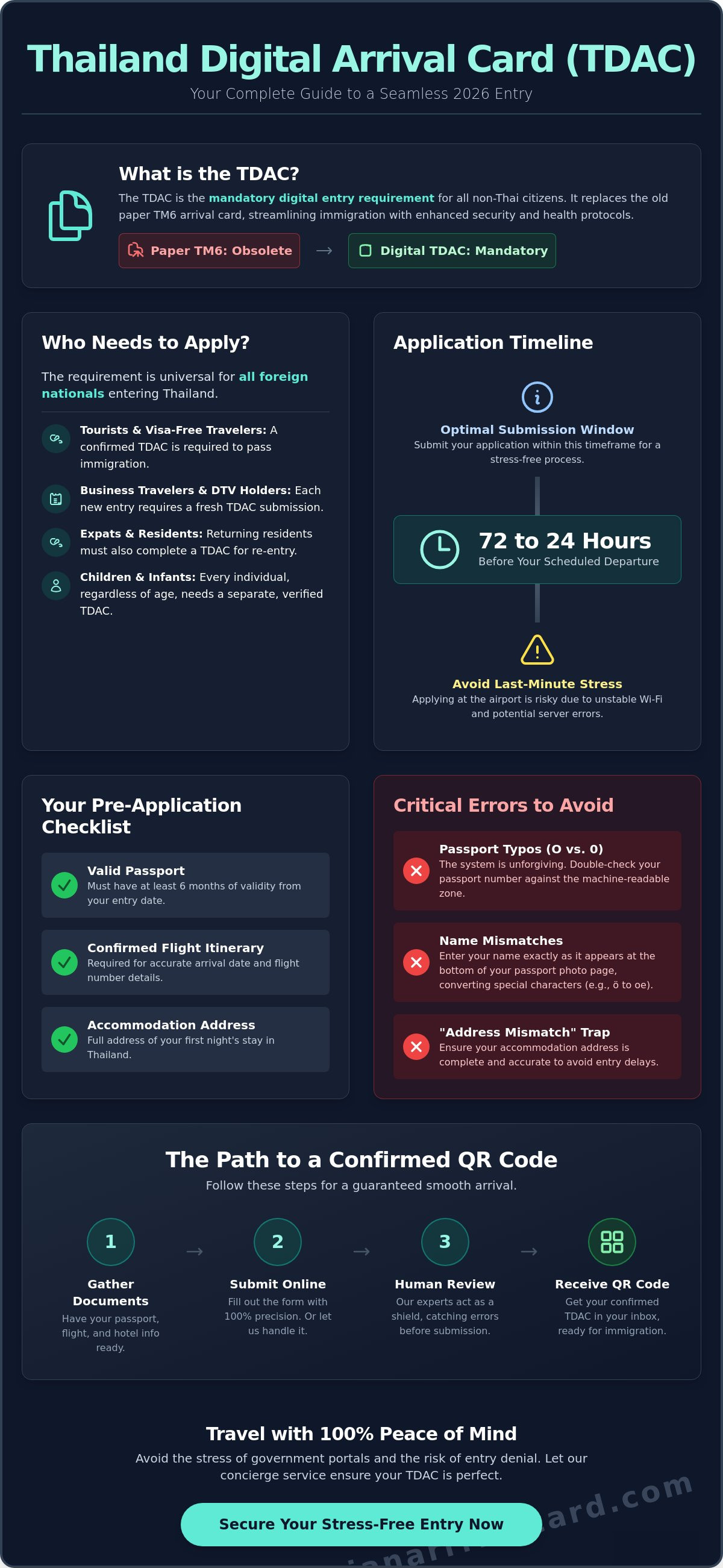
The Thailand Digital Arrival Card (TDAC) is the mandatory digital entry requirement for all non-Thai citizens crossing into the Kingdom. It serves as the definitive official record of your arrival, effectively replacing the now-discontinued TM6 paper form that was phased out between 2024 and 2025. If you look into the history of the Thailand Digital Arrival Card, you'll see it was designed to modernize border control while significantly enhancing national security protocols. In 2026, this system is more than just a digital version of an old card; it integrates your immigration data with real-time health declarations to create a safer environment for everyone. This ensures a unified, efficient screening process at every point of entry, whether you arrive via a major international airport, a land border, or a sea port.
Every single entry into Thailand requires a fresh TDAC submission. Even if you're a frequent visitor, a business traveler on a multi-entry visa, or a long-term resident, you cannot reuse a previous confirmation code. Each trip is treated as a unique event, requiring its own verified digital footprint to clear immigration successfully. This meticulous approach allows Thai authorities to maintain accurate records of who is in the country at any given time. If you find yourself confused by the specific fields or technical requirements of the portal, seeking Thailand digital arrival card help can prevent the common errors that lead to entry denials or long delays at the border.
Who is required to complete the TDAC?
The requirement is nearly universal for all foreign nationals entering the country. This includes standard tourists, Destination Thailand Visa (DTV) holders, and even returning expats with permanent residency. Crucially, visa-free entry travelers still need a TDAC to pass through the gates at Suvarnabhumi or Phuket. Families should be aware that every individual, including children and infants, must have their own distinct digital declaration. While the system allows group applications for up to 10 people, the data for every child and dependent must be verified to match their specific passport details with 100% accuracy to avoid separation or questioning at the gate.
When should you submit your arrival card?
Timing is everything for a stress-free arrival in the Land of Smiles. We recommend submitting your TDAC 24 to 72 hours before your scheduled departure time. This window is vital because it allows for technical processing and gives you a safety net to rectify any mistakes identified during a human review process. Once issued, your digital confirmation is strictly tied to your specific arrival date and flight details. Don't wait until you land to start the process. Attempting a submission on unstable airport Wi-Fi or while standing in a crowded queue is a high-risk strategy. Technical timeouts or server errors during peak travel times can leave you without the required QR code right when the immigration officer asks for it.
Step-by-Step Guide: How to Fill the Thailand Digital Arrival Card Correctly
Before you begin the application process, gather your essential documents. You'll need a passport with at least six months of validity, your confirmed flight itinerary, and the full address of your first-night accommodation. According to the U.S. Embassy travel requirements, the digital arrival card is a strict prerequisite for entry. Failing to present a valid QR code can lead to immediate boarding denial or significant delays upon landing. If you find yourself overwhelmed by the technical fields, seeking Thailand digital arrival card help ensures that your submission is handled with the precision a digital gatekeeper requires.
Section 1: Personal and Passport Information
Precision is paramount when entering your identity details. You must input your name exactly as it appears in the machine-readable zone (the two lines of text at the bottom of your passport photo page). If your name contains special characters common in European passports, such as "ö" or "ñ", convert them to the standard English characters used in that machine-readable zone. A frequent and costly error involves confusing the letter "O" with the number "0" in passport IDs. The system's OCR verification is unforgiving. If these characters don't match your uploaded scan, the application will likely trigger a manual review or an outright rejection. For travelers who want to avoid these technical hurdles, a professional verification service provides a protective layer of human oversight to catch these typos before the government sees them.
Section 2: Travel Details and Accommodation
The system requires specific formatting for your stay details. When entering your first-night hotel address, you must provide the full, registered business name and street address. Vague entries like "Airbnb in Bangkok" are a common trap that leads to submission failure. Flight numbers also require careful entry. While some systems accept "TG 601", the TDAC portal often prefers the compressed "TG601" format. Ensure you correctly specify your purpose of visit. Misrepresenting tourism as business, or vice versa, can create legal complications if your visa type doesn't align with your declaration.
Section 3: The 2026 Health Declaration
The 2026 health declaration is a critical addition designed to monitor communicable diseases. You'll be asked specific questions about your recent travel history, particularly regarding visits to "Yellow Fever Warning" countries within the last 10 days. If you have visited a high-risk zone, you must disclose it. Your answers must match the physical stamps in your passport. If an immigration officer discovers a mismatch between your digital declaration and your actual travel history, you may face immediate quarantine or entry denial. Review every answer for consistency to ensure your health status is recorded accurately and transparently.
Critical Errors to Avoid When Completing Your TDAC
A single character mismatch between your digital declaration and your physical passport can derail your entire itinerary. While the system is designed for speed, it's notoriously unforgiving of human error. According to the U.S. Embassy guidance on the Thailand Digital Arrival Card, this digital step is a strict requirement for entry. If you encounter technical hurdles or find the fields confusing, seeking professional Thailand digital arrival card help can be the difference between boarding your flight and being turned away at the gate. The stakes are high, and the government portal doesn't offer a safety net for those who rush through the process.
One of the most frequent points of failure is the "Address Mismatch" trap. Vague entries such as "Friend's house" or "Hotel in Sukhumvit" are often flagged by the system or rejected by immigration officers upon arrival. The portal expects a registered business name and a precise postal code that matches official Thai records. Similarly, passport expiration issues cause significant distress. The digital portal might technically allow you to submit data for a passport with only four months of validity, but a border agent will firmly deny entry based on the six-month rule. Always verify your document's expiration date before you begin the application.
Once you click the final submit button, your data is transmitted directly to the immigration database. There is no simple "edit" button available to travelers. If you realize you've made an error after the fact, the process of fixing errors on an already submitted TDAC usually involves starting a completely new application from scratch. This can lead to conflicting records in the system, which may trigger additional questioning at the airport.
Why automated systems miss common human mistakes
Government portals are programmed to ensure fields are populated, but they rarely verify if the information is actually correct. They'll accept "John Doe" even if your passport clearly says "Jon Doe." Browser "Autofill" features are particularly dangerous; they often insert outdated passport numbers or old residence addresses into sensitive fields without your knowledge. Professional human oversight acts as a protective shield, catching these subtle discrepancies before they cause a formal rejection at the immigration counter.
Common technical glitches in the official portal
"Session Timed Out" errors are a persistent frustration, often occurring during the final document upload phase when the server is under heavy load. If this happens, your progress is typically lost, forcing a total restart. If you don't receive a confirmation email within an hour of submission, check your spam folder immediately. These common Thailand arrival card mistakes frequently result in travelers arriving at the airport without the necessary QR code, leading to unnecessary stress and potential boarding delays.
Using Your Confirmed Arrival Card: Airport Procedures
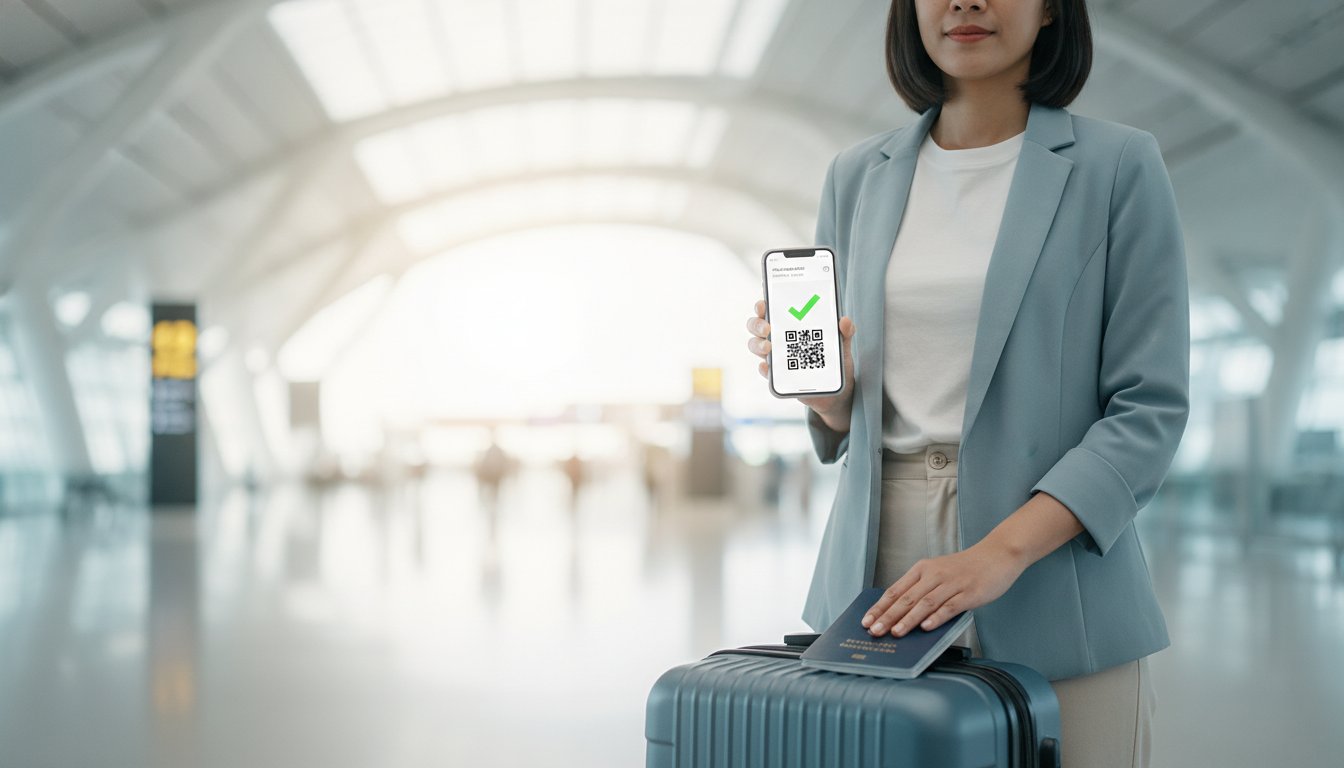
Once your submission is complete, your focus should shift to securing the confirmation document. The system generates a PDF containing your unique QR code, which is sent directly to your provided email address. Don't panic if it doesn't appear in your inbox immediately. It's common for these automated messages to be diverted to your "Spam" or "Junk" folders. We recommend downloading the file and saving it to your phone's home screen or a dedicated travel folder. While Thailand has embraced a fully digital workflow in 2026, carrying a physical printout remains a wise precaution. A dead battery or a cracked screen shouldn't be the reason you're delayed at immigration. If you're still waiting for your code or need Thailand digital arrival card help to locate a lost confirmation, our support team can assist in verifying your status.
Your responsibility doesn't end once you've passed the initial scan. After you're cleared and stamped into the Kingdom, keep the digital file accessible. Many hotels and local authorities require a copy of your arrival card for mandatory guest registration or 90-day reporting. Having this data ready ensures that your stay remains compliant with local regulations without you having to dig through old emails. To ensure your documentation is always accurate and accessible from the moment you land, apply for your Thailand arrival card through our concierge service for professional document management.
Arriving at Suvarnabhumi or Phuket International
Upon landing, look for the "Digital Arrival" or "TDAC" signage. These markers will guide you toward the specific lanes equipped with the latest scanning technology. Have your passport open to the photo page and your QR code visible on your screen before you reach the front of the queue. Efficiency is the goal here. If an officer's scanner fails to read your code, try increasing your phone's screen brightness to the maximum level. If the issue persists, the officer may manually enter your details using your passport number, provided your digital record exists in the central database. Having a backup digital copy saved in your cloud storage or as a photo in your gallery is a critical fail-safe for these exact moments.
Verification of your health status
The 2026 entry process is integrated with advanced health screening. As you move toward the immigration counters, you'll pass through thermal scanners designed to detect elevated body temperatures. If the system flags a potential health risk, you'll be directed to the health desk for a secondary assessment. The officers there will cross-reference your physical condition with the health declaration you provided in your TDAC. Transparency during the application phase pays off here; consistency between your digital data and your physical health check ensures a swift transit. This integrated approach is designed to protect both travelers and residents, making your honest declaration a cornerstone of a safe trip.
Stress-Free Travel: The AsianArrivalCard Concierge Advantage
Navigating digital bureaucracy shouldn't be the most taxing part of your international journey. While official portals provide the basic infrastructure for entry, they often lack the accountability and support required when technical glitches occur. AsianArrivalCard operates as your meticulous private assistant, providing specialized Thailand digital arrival card help to ensure your documentation is flawless. We understand that the stakes are high. A simple character mismatch in your passport number can result in a boarding denial or a stressful delay at immigration. Our service is designed to eliminate these risks by positioning a knowledgeable partner between you and the unforgiving nature of automated government systems.
We view our €14.99 concierge fee as a form of "travel insurance" for your essential paperwork. This small investment provides you with a 4-hour delivery guarantee and access to 24/7 WhatsApp support, ensuring that a real person is always available to resolve your concerns. If the official portal crashes or your confirmation email is lost in a spam filter, you don't have to face the problem alone. We manage the logistical burden so you can focus on the excitement of your upcoming trip to Bangkok or the islands.
How our human agents review your application
The core of our value lies in human oversight. Unlike automated systems that only check if a field is filled, our agents perform a side-by-side verification of your passport scans against your typed data. We catch the subtle errors that OCR technology often misses, such as the confusion between the letter "O" and the number "0." Having a real person submit your form to the official portal ensures that every detail aligns with the strict requirements of Thai immigration. We stand by the quality of our work with a full money-back guarantee. If your arrival card is not delivered as promised, your fee is fully refunded, no questions asked.
Secure your 2026 Thailand entry now
Don't let the complexities of the 2026 entry requirements overshadow your travel preparations. Delegating the technical logistics to experts allows you to reclaim your time and travel with absolute confidence. While we handle the digital bureaucracy and verify your data's accuracy, you can focus on finalizing your itinerary and packing your bags. Our goal is to ensure that your arrival at Suvarnabhumi or Phuket is nothing more than a quick scan and a welcoming stamp. Get expert help with your Thailand Digital Arrival Card today and experience the premium relief of a professionally managed entry process.
Secure Your Smooth Entry to Thailand
The transition to a digital-first entry system in 2026 means that meticulous preparation is no longer optional. You've learned that the TDAC is a mandatory gatekeeper for all foreign nationals. Even a minor character mismatch can trigger significant border delays or boarding denials. By understanding the 72-hour submission window and the specific 2026 health declaration requirements, you're already better prepared for a seamless arrival at Suvarnabhumi or Phuket.
Technical glitches and "Address Mismatch" traps remain a constant reality for many travelers. If you're seeking professional Thailand digital arrival card help, delegating this task to experts ensures your submission is error-free and verified by a human eye. Let our experts handle your Thailand Digital Arrival Card for a stress-free entry. Our concierge service provides a meticulous human agent review of every submission, a 4-hour expedited delivery guarantee, and 24/7 WhatsApp support for travelers on the move. Focus on your upcoming adventure while we ensure your digital paperwork is 100% accurate. We're ready to help you start your Thai journey with total confidence.
Frequently Asked Questions
Is the Thailand Digital Arrival Card (TDAC) mandatory for everyone?
Yes, the TDAC is mandatory for all foreign nationals entering Thailand by air, land, or sea as of 2026. This requirement applies to tourists, business visitors, and even long-term residents. The only exceptions are for travelers transiting through the airport without passing through immigration control and those entering via a Border Pass. If you don't have a confirmed QR code, you'll likely be denied boarding by your airline.
How much does it cost to fill out the Thailand arrival card?
The official government portal provides the TDAC free of charge. However, many travelers seek professional Thailand digital arrival card help to avoid the technical glitches and typos that lead to entry denial. Our concierge service charges a fee for meticulous human review and 24/7 support. This investment acts as a protective shield, ensuring your data is 100% accurate before it reaches immigration authorities.
What happens if I make a mistake on my TDAC after submitting it?
There's no way to edit a TDAC once it's been submitted to the government database. If you notice a typo in your passport number or flight details, you must complete a completely new application. This generates a fresh QR code that overrides your previous, incorrect filing. To prevent the stress of multiple submissions, we recommend using a human verification service to catch errors before the final click.
Can I fill out the Thailand arrival card for my entire family at once?
You can use the group application feature to submit arrival cards for up to 10 people simultaneously. This is a highly efficient option for families or small travel groups arriving on the same flight. Every individual, including infants and young children, must have their specific passport and health data recorded. Each person will receive a unique QR code that must be presented to the officer at the border.
How long does it take to get the TDAC confirmation email?
Confirmation emails usually arrive within one hour of a successful submission. We advise completing your application within the 72-hour window before your arrival to account for any technical delays. If the QR code doesn't appear in your inbox, check your spam folder immediately. Our concierge clients enjoy a 4-hour delivery guarantee, providing a reliable timeline for those on a tight schedule.
Do I need a printer to show my arrival card at the airport?
A physical printer isn't strictly necessary because immigration officers can scan the QR code directly from your smartphone screen. However, we strongly recommend carrying a printed backup copy as a fail-safe measure. A dead battery or a technical glitch with your device shouldn't stand between you and your entry into the Kingdom. Having a paper copy ensures you're prepared for any situation at the counter.
What should I do if the official TDAC website is not working?
If the official portal is down for maintenance or crashing due to high traffic, you should wait and try again later. These technical frustrations are common during peak travel periods. If you're facing a looming flight deadline, our concierge team can monitor the system and handle the submission the moment the portal stabilizes. This proactive oversight prevents you from arriving at the airport without your mandatory entry documentation.
Is the TDAC the same as a Thailand Visa?
No, the TDAC is not a visa and it doesn't grant you legal permission to stay in Thailand. It's a mandatory immigration and health record required for entry. A visa is a separate document that provides the legal right to visit the country for a specific duration. You must ensure you have both a valid visa (if required for your nationality) and a confirmed TDAC to pass through immigration successfully.


