What if a minor clerical error on a digital form was the only thing standing between you and the vibrant streets of Bangkok? As of June 2026, the question "do I need arrival card for Thailand" has a definitive, high-stakes answer: yes, and it must be digital. The transition from paper to the mandatory Thailand Digital Arrival Card (TDAC) means that your entry is now governed by a precise online system where accuracy is everything. A single typo can lead to significant delays at the border, turning a dream vacation into a logistical headache before you even leave the arrival hall.
It's natural to feel anxious about navigating complex government portals or the risk of being denied entry due to a simple mistake. We understand that your time is valuable and the pressure to get every detail right is high. This guide provides the latest 2026 updates on Thai entry requirements, including the mandatory 72-hour submission window and the recent reduction of visa-free stays to 30 days. You'll discover how to secure a valid QR code and move through immigration with total peace of mind. We've simplified the complexities so you can focus on your journey while we handle the digital precision.
Key Takeaways
- Understand why the Thailand Digital Arrival Card (TDAC) is now a mandatory requirement for all foreign nationals, including tourists and long-term residents.
- Resolve the question "do I need arrival card for Thailand" by learning about the strict 72-hour submission window required before your arrival.
- Discover how the digital system processes your health and security data to generate the unique QR code necessary for immigration clearance.
- Identify the most common data entry errors, such as passport number typos, that frequently lead to avoidable delays at the airport.
- Learn how professional human oversight can safeguard your entry process by detecting inaccuracies that automated government systems often overlook.
Mandatory Entry Requirements: Do You Need an Arrival Card for Thailand?
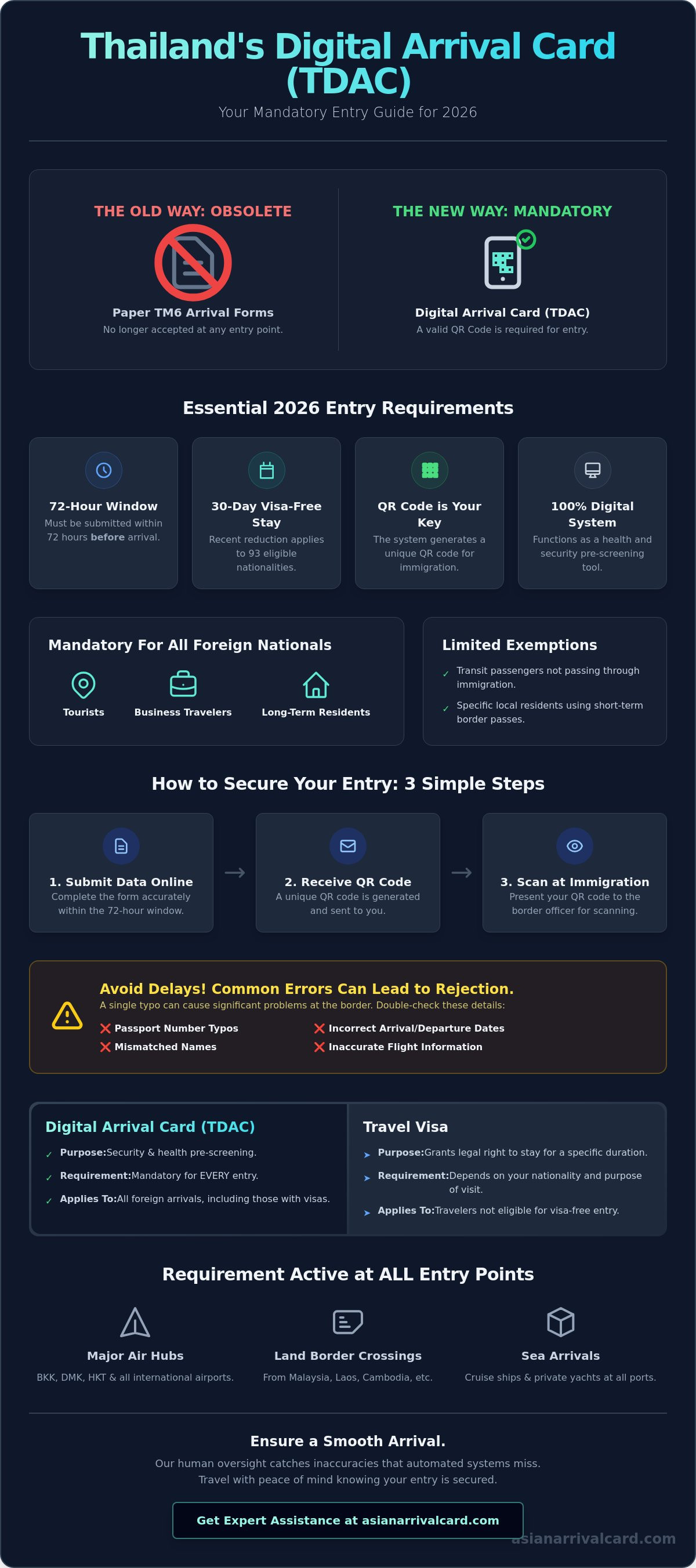
The era of scrambling for a pen on a descending flight to Bangkok is officially over. If you're asking, "do I need arrival card for Thailand" for your 2026 trip, the answer is a firm yes. However, the format has changed completely. The Thai government has retired the traditional paper TM6 form in favor of a 100% digital platform. This transition is not just a convenience; it's a mandatory security protocol that applies to nearly every foreign national crossing the border. Whether you're visiting for a beach holiday, a business meeting, or returning to your long-term residence, the Thailand Digital Arrival Card (TDAC) is your digital key to entry.
Only a few specific groups are exempt from this requirement. If you're a transit passenger remaining within the international terminal and not passing through immigration, you don't need to complete the filing. Similarly, certain local residents using specific border passes for short-term land crossings from neighboring countries may be exempt. For everyone else, failure to present a valid TDAC QR code will result in being turned away at the boarding gate or facing significant delays upon landing. With Thailand targeting up to 40 million arrivals in 2026, these digital systems are strictly enforced to manage the high volume of travelers.
TDAC vs. Visa: Understanding the Difference
Many travelers mistakenly believe that holding a valid visa or qualifying for a visa exemption covers all entry needs. It doesn't. A visa grants you the legal right to stay in the country, but the TDAC serves as a mandatory security pre-screening tool for all arrivals. It's designed to integrate with Thailand's modern biometrics-led border security. By Understanding the Thailand Digital Arrival Card (TDAC) System, you can see how this digital shift allows authorities to verify health and security data before you even touch down. It acts as a protective layer, ensuring that your specific travel details are verified against government databases in real-time. Even if you're from one of the 93 nationalities eligible for a 30-day visa-free stay, the digital arrival card remains a non-negotiable requirement for every single entry.
Entry Points Covered by the Digital Requirement
This requirement is universal across all modes of transport. The system is designed for a seamless transition, but it demands meticulous attention to detail to avoid the cold, automated rejection of a mismatched document. The digital requirement is currently active at:
- Major Air Hubs: Including Suvarnabhumi (BKK), Don Mueang (DMK), and Phuket International (HKT).
- Land Border Crossings: Requirements apply to those entering from Malaysia, Laos, or Cambodia via official checkpoints.
- Sea Arrivals: Guidelines are strictly applied to cruise ship passengers and private yacht entries at all international ports.
Regardless of how you arrive, the digital filing must be completed before you reach the immigration desk. Border officers no longer stock paper forms, and attempting to fix a digital error while standing in a busy queue is a recipe for unnecessary stress.
Understanding the Thailand Digital Arrival Card (TDAC) System
The TDAC is more than a digital replacement for paper; it's a sophisticated data-gathering node. By centralizing health and security declarations, the Thai Immigration Bureau can screen arrivals against real-time databases before they ever reach the gate. This system generates a unique QR code that serves as your digital identity during the entry process. When an officer scans this code, your pre-verified information instantly populates their terminal, reducing manual entry errors and speeding up the queue. For 2026 arrivals, this digital integration is the primary defense against border congestion and health security risks. When planning your itinerary, the question isn't just "do I need arrival card for Thailand," but rather how the technical requirements of the TDAC system influence your pre-flight checklist.
To ensure your data remains current, the Thai government maintains Mandatory Entry Requirements that dictate how and when you submit your details. This isn't a process you can complete months in advance. It's a precision-timed requirement that demands accuracy. If you're feeling overwhelmed by the technical specifics, using a professional TDAC assistance service can provide the human oversight needed to ensure your submission is flawless and compliant.
The 3-Day Application Window
The timing for your submission is non-negotiable. The 3-day window is strictly enforced by the digital portal. You cannot submit your TDAC more than 72 hours before your scheduled arrival in Thailand. This rule ensures that your health status and flight details are as accurate as possible. Waiting until you're at the departure gate is risky. Public Wi-Fi issues or portal timeouts can leave you without a QR code when airline staff asks for it. Precision in timing is just as vital as the data itself.
What Information is Required?
Preparation is the best remedy for travel stress. Before you begin the digital filing, ensure you have your documents ready. Your passport must have a minimum of six months of validity remaining from your date of entry. You'll also need your specific flight numbers for both your arrival and planned departure. Finally, the system requires a confirmed accommodation address. This must include the full name of your hotel or the specific residential address where you'll be staying. The system cross-references this data; any discrepancy between your passport's machine-readable zone (MRZ) and your digital entry can trigger a manual review or a denial of entry.
Step-by-Step: How to Secure Your Thailand Arrival Card
Precision is your best ally when navigating the digital entry process. Before you even open your browser, you must have your confirmed flight itinerary and a full hotel address ready. The question "do I need arrival card for Thailand" is quickly followed by the technical reality of data entry. You aren't just filling out a form; you're syncing your travel history with a government database. Any mismatch between your physical documents and your digital submission can halt your journey at the check-in desk. Ensure you have a clear, high-resolution photo of your passport's bio-data page to avoid manual entry errors that the system might flag as fraudulent.
The most critical step is ensuring your name matches the machine-readable zone (MRZ) at the bottom of your passport exactly. This is where most automated rejections occur. When you visit the Official Thailand Digital Arrival Card (TDAC) portal, the system will ask for your passport number, flight details, and duration of stay. Once you submit these details, the portal generates a unique QR code. We recommend saving this code to your phone's digital wallet and printing a physical backup. Technology can fail, but a paper copy ensures you remain compliant even if your device loses power or connectivity upon landing.
Common Submission Hurdles
Official portals often struggle with high traffic, leading to frustrating system timeouts or server errors. You might encounter an "Invalid Passport Number" message if the system fails to recognize specific character sets or if there's a slight lag in database synchronization. If you're struggling with these technical barriers, our Thailand Digital Arrival Card (TDAC) 2026: The Complete Traveler’s Guide offers deeper insights into troubleshooting these specific errors. Dealing with a "do I need arrival card for Thailand" query becomes much simpler when you understand the logic behind these automated roadblocks.
Checklist for a Successful Application
Success depends on the quality of your information. Follow this meticulous checklist to ensure your QR code is issued without delay:
- Scan Quality: Your passport photo must be glare-free with all four corners of the document visible.
- Time Zone Verification: Calculate your 72-hour window based on Thailand's local time (ICT), not your current location.
- Email Accuracy: Double-check every character of your email address. The QR code is sent via email, and a single typo here means you'll never receive your entry document.
- Flight Numbers: Use the code for your final leg into Thailand, not your initial departure code if you have a layover.
By treating these steps with the attention they deserve, you transform a potential border delay into a seamless transition through immigration.
Avoiding Delays: Common Errors and Typos
A single misplaced digit can be the difference between a smooth landing and a stressful interrogation at the border. While you've already confirmed the answer to "do I need arrival card for Thailand," the real challenge lies in the precision of your data entry. Thai immigration software is designed for exact matches. It doesn't interpret intent; it only verifies data. If your passport number is off by one character, the system flags the discrepancy immediately. This "close enough" approach, which might work for a hotel booking, is a recipe for disaster with government security systems. When your QR code doesn't align with the machine-readable zone of your passport, you're no longer a traveler; you're a data mismatch requiring manual intervention.
The consequences of a mismatch are immediate and cold. If an officer scans your code and the data doesn't mirror your physical document, you may be sent to a secondary screening area. This isn't just a delay; it's an avoidable disruption to your travel plans. To prevent these logistical failures, you can secure your Thailand Digital Arrival Card through our expert review service, where human eyes catch the errors that automated portals ignore.
Can You Fix a Mistake After Submission?
Editing a submitted form on the official government site is notoriously difficult. Once the system generates your QR code, the data is often locked into the Immigration Bureau's database. If you spot a typo after the fact, the official protocol usually requires you to start a completely new application. This means re-entering every detail and waiting for a new code to be issued. If you're also visiting neighboring countries, check the Malaysia Digital Arrival Card (MDAC) Assistance requirements, as their digital systems have similarly strict protocols for data accuracy.
The "Gate Rejection" Scenario
Your first hurdle isn't actually Thai immigration; it's the airline check-in counter. Airlines are legally responsible for ensuring passengers have the correct documentation. If your TDAC is missing or contains obvious errors, staff may deny you boarding to avoid government fines. Trying to re-apply in a crowded boarding area while the final call is announced is a high-stress situation you don't want to experience. Human review is the most effective safeguard against these scenarios. A meticulous second look ensures your flight numbers, passport digits, and name spelling are perfect before you ever leave for the airport. This protective oversight transforms a rigid digital process into a reliable path to your destination.
Simplifying Your Entry: The Benefits of Concierge Assistance
Navigating international borders shouldn't feel like a high-stakes gamble. While you've confirmed the answer to "do I need arrival card for Thailand," the burden of technical precision shouldn't rest entirely on your shoulders. Time-conscious travelers frequently turn to AsianArrivalCard because they recognize that automated government portals are inherently unforgiving. A single character error can derail an entire itinerary. Our service acts as a stabilizing force; we provide the meticulous human oversight necessary to ensure your entry is seamless and secure. We offer a premium relief by taking over the logistical heavy lifting, allowing you to focus on your destination rather than the bureaucracy of the journey.
Efficiency is the cornerstone of our approach. For those with tight schedules, we provide expedited processing that can deliver your confirmed card in as little as four hours. This speed is matched by a commitment to reliability, backed by dedicated WhatsApp support and a money-back guarantee. We don't just facilitate a form; we manage a critical component of your travel security.
What Our Concierge Service Includes
Our process is designed to be a protective intermediary between you and potential errors. We don't simply pass your data along; we verify it. Our service includes:
- Manual Verification: A meticulous review of your passport scan against your data entry to catch typos that automated systems miss.
- Technical Submission: We handle the entire interaction with the Thai government portal, navigating any server errors or system timeouts on your behalf.
- Multi-Channel Delivery: Your confirmed arrival card is delivered directly to your email inbox and via WhatsApp, ensuring you have a copy ready for the airline and immigration.
Why Human Oversight Matters in 2026
Automation is efficient until it encounters a nuance it isn't programmed to handle. In 2026, the Thai immigration system is increasingly rigid. An automated government rejection email is cold and provides no guidance on how to fix the underlying issue. Human oversight changes that dynamic. Our experts provide personalized support for complex travel itineraries, such as multi-city arrivals or large family groups where data synchronization is vital. This human-led approach ensures you aren't just another data point in a queue. We act as your private assistant, standing between you and the stress of a potential gate rejection.
Accuracy is non-negotiable for modern travel. By choosing a concierge approach, you secure a knowledgeable partner who values your time and peace of mind. Don't leave your entry to chance or a flawed algorithm.
Get your Thailand Digital Arrival Card reviewed and submitted by an expert today.
Secure Your Seamless Entry to Thailand
Navigating the transition to a fully digital immigration system doesn't have to be a source of travel anxiety. As you prepare for your journey, the question "do I need arrival card for Thailand" is answered by the mandatory requirement of the Thailand Digital Arrival Card. Success at the border depends on two critical factors: perfect data accuracy and strict adherence to the 72-hour submission window. By ensuring your passport details and flight information are flawlessly synced with the Thai Immigration Bureau's database, you transform a potential bottleneck into a swift, professional entry process.
We understand that the stakes are high and automated systems are often unforgiving. To eliminate the risk of typos or gate rejections, you can skip the stress and have an expert handle your Thailand Arrival Card registration. Our concierge service provides a meticulous human review of every application to detect errors that software might miss. With confirmed delivery within 4 hours and a money-back guarantee if an entry delay occurs due to our error, your logistics are in capable hands. Focus on the vibrant experiences awaiting you in the Land of Smiles while we ensure your digital path is clear. Safe travels.
Frequently Asked Questions
Is the Thailand arrival card mandatory for all tourists in 2026?
Yes, the Thailand Digital Arrival Card (TDAC) is a mandatory requirement for all foreign nationals entering the country in 2026. This digital system officially replaced the paper TM6 forms to streamline immigration and enhance security. Whether you're visiting for a short holiday or business, you must complete the filing. If you're asking "do I need arrival card for Thailand" as a tourist, the answer is a non-negotiable yes for every entry.
Can I apply for the Thailand Digital Arrival Card (TDAC) at the airport?
No, you cannot wait until you arrive at the airport to apply for the Thailand Digital Arrival Card. The system requires submission within the 72-hour window before your arrival. Most airlines are now instructed to verify your QR code during the check-in process. If you don't have a valid code, you may be denied boarding. It's vital to secure your documentation before you leave for the airport to avoid high-stress delays.
How much does the Thailand arrival card cost through the official portal?
There is no fee to submit the Thailand Digital Arrival Card when using the official government immigration portal. The Thai government provides this digital service free of charge to all international travelers. While the filing itself is free, many travelers choose to use a concierge service for professional review. This helps ensure that every data point is accurate and that no technical errors prevent the issuance of your mandatory QR code.
What happens if I make a typo on my Thailand arrival card?
A typo on your arrival card can lead to significant delays at immigration or even a denial of entry. Thai immigration systems require an exact match between your digital record and your passport's machine-readable zone. Because the official portal often restricts editing after submission, you'll likely need to file a completely new application. This is why meticulous human oversight is so valuable; it catches minor errors before they become border-control headaches.
Do children and infants need their own Thailand arrival card?
Yes, every traveler, including children and infants, must have their own individual Thailand Digital Arrival Card. The system is designed to track every person entering the country for health and security purposes. You'll need to submit a separate application for each family member using their specific passport details. Ensure that each child's QR code is saved and ready for inspection alongside their physical passport when you reach the immigration desk.
How long does it take to receive the TDAC QR code after submission?
Most travelers receive their TDAC QR code via email almost immediately after a successful submission on the official portal. However, technical glitches or high server traffic can occasionally delay this process. It's recommended to apply as soon as your 72-hour window opens to account for any potential system downtime. If you're in a rush, professional assistance can often guarantee a confirmed card within a 4-hour timeframe, providing much-needed peace of mind.
Do I need a separate arrival card if I enter Thailand by land or sea?
Yes, the digital arrival card requirement is universal across all international entry points, including land borders and seaports. Whether you're crossing from Malaysia by bus or arriving on a cruise ship at Laem Chabang, the TDAC remains a mandatory entry document. The system ensures that all arrivals are screened through the same security database. You'll need to specify your exact entry point and mode of transport during the online application process.
Can I use my old paper TM6 card instead of the digital system?
No, the old paper TM6 cards are no longer accepted for foreign nationals entering Thailand in 2026. The government has fully transitioned to the digital TDAC system to modernize its border controls. Attempting to use an old paper form will not grant you entry. You must use the digital portal to generate a QR code. This shift towards a paperless system is part of a broader effort to reduce congestion and improve data accuracy at the border.


